This thread follows up on this discussion. I’d like to reiterate this suggestion: importing the OSM database content into layers independent of OHM’s, e.g., having a water_areas layer and a water_areas_OSM layer.
-
In terms of licensing, this would simply require adding “OSM contributor” in the bottom right corner next to the OHM attribution.
-
This will not impact existing renderers in any way, as the layer content is independent of OHM’s.
Finally, from a technical standpoint, we already have the software to create the layers from the database.
Just to be clear, you’re referring only to a display layer, right? Since our previous discussion, OSM has finally released their vector tileset. So your request essentially boils down to creating a new stylesheet that pulls in both the OHM and OSM vector tilesets and selectively renders tile layers from either OHM or OSM. There’s no need to import anything to a static database of our own. In fact, we could conceivably discontinue the obsolete OSM-derived osm_land coastline tileset at this point in favor of OSM’s vector tiles.
I’d encourage you to experiment a bit with curating the two tilesets. Once you have a combination that you like, we can feature it in the homepage’s layer switcher.
Regardless of any OSM/OHM mashup style, we have no problem with mappers remapping what’s already in OSM. Mapping the present from a historical perspective will necessarily result in different details than OSM. A lake that has existed since time immemorial can be mapped in OHM with explicit citations to sources that OSM would discourage but that would be useful to researchers and students who want to learn more.
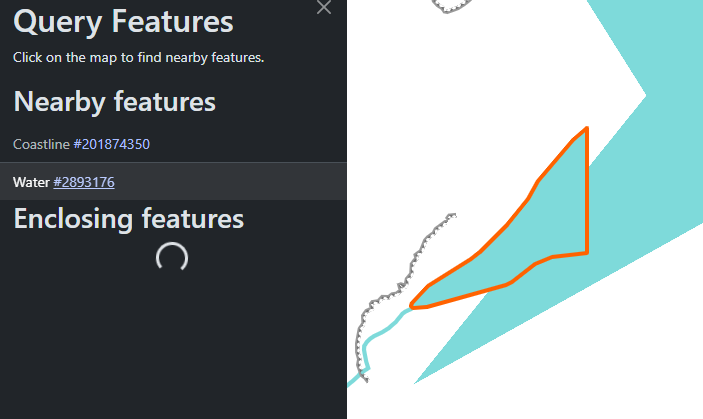
im not sure if this is related to this post but is there a way to get rid of parts of the sea that is displayed on OHM due to edits on OSM
To give context to the picture, the straight line cutting into the land is part of the coastline on OSM while the orange line is where the coastline should actually be based on a survey sheet
This kind of discrepancy is an inherent downside to mashing up OSM and OHM data without sophisticated heuristics. We have a longstanding goal to migrate the stylesheets to OHM coastline data, but coastlines are inherently fragile and ours are very broken. In the meantime, the usual trick is to map place=island and natural=water areas to patch up the old OSM coastline.