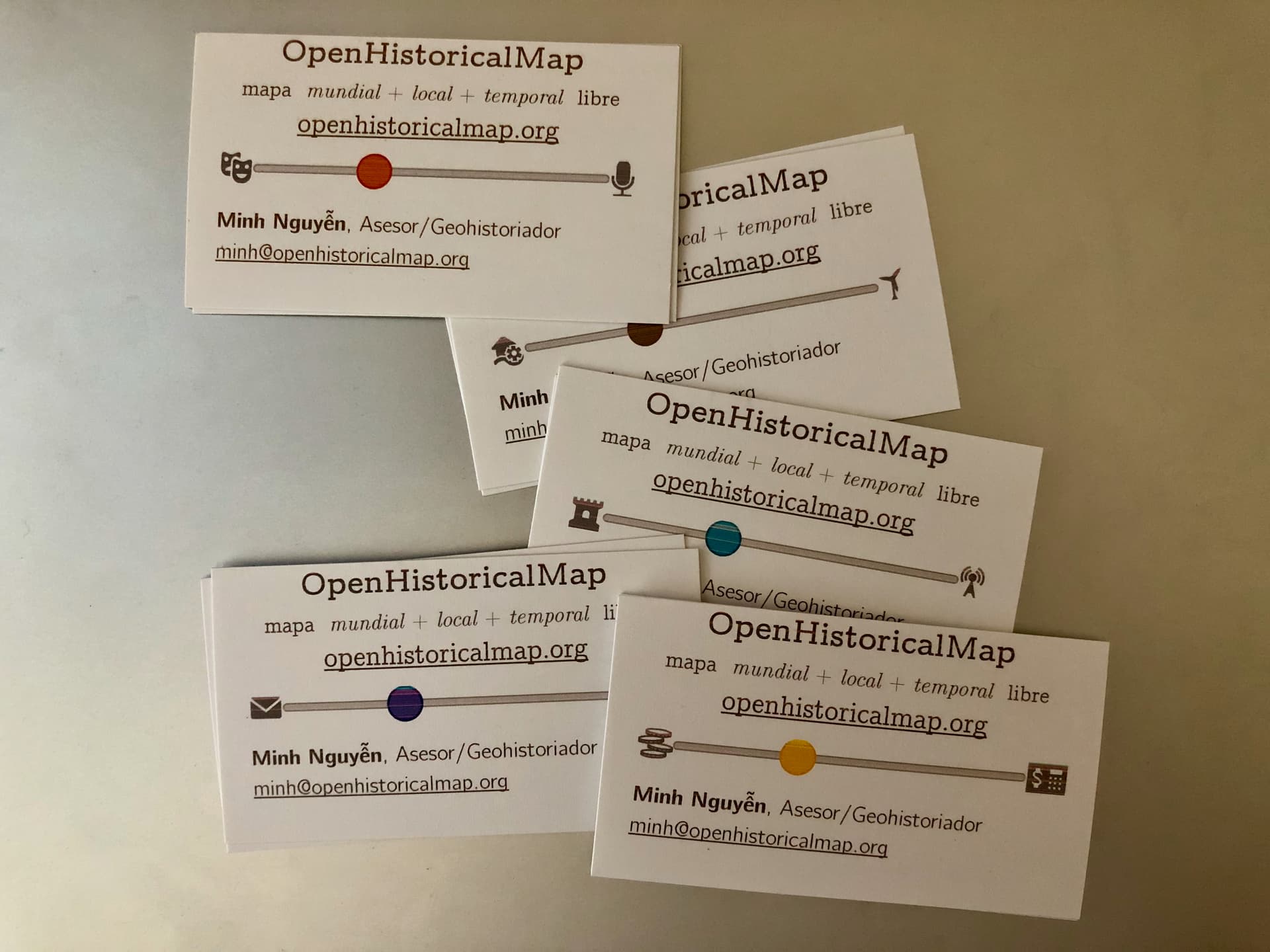
A couple weeks ago, I was packing for a trip to Tacoma to speak at NACIS, when I realized that some kind of trinket would be helpful for spreading the word about OHM. So I quickly printed out some business cards on business card paper I had lying around. I didn’t include a logo because our current logo isn’t very print-friendly, but maybe a future logo will be more suitable for print. Instead, I hacked together a decorative timeline so the card is a little more eye-catching.

I handed out a bunch of these cards at NACIS and a bunch more at a school reunion last weekend. Business cards are a little old-fashioned these days, but it’s pretty fitting for what we do. The folks I spoke with appreciated having something tangible to take with them or photograph for their records. They were impressed that our hobbyist project would have something professional-looking.
I encourage you to print out your own business cards so you can more easily introduce folks to OHM in conversation. It doesn’t have to be for a formal event like a conference. Hand one out to the librarian when explaining what you need from them, stop by the local historical society’s booth at the next street festival, or strike up a conversation with the person next to you on the train. Leave some at the counter of the restaurant you’re putting on the map.
The template for this business card is available on the OSM Wiki in ODT format, which you can open in LibreOffice. (I can post another version in Pages format if you need it.) The text is set in CMU Concrete, CMU Classical Serif, and CMU Bright, all part of the open-source Computer Modern font family. Feel free to replace the title “Volunteer Geohistorian” with something more playful or design your own.
If you also contribute to OpenStreetMap, this wiki page has some additional designs you can print out alongside your OHM business cards.